J. Robert Oppenheimer was an American physicist known for his groundbreaking work in quantum mechanics and theoretical physics. Oppenheimer was tasked with organizing the Manhattan Project, a top-secret program to develop nuclear energy for military purposes during WWII. The project resulted in the atomic bombs dropped on Hiroshima and Nagasaki. Following the war, Oppenheimer came under intense scrutiny for possible atomic espionage. He was found not guilty of treason but was exiled from the nuclear establishment. Sixty years later, in 2014, declassified reports revealed he’d been a victim of bias and unfairness.
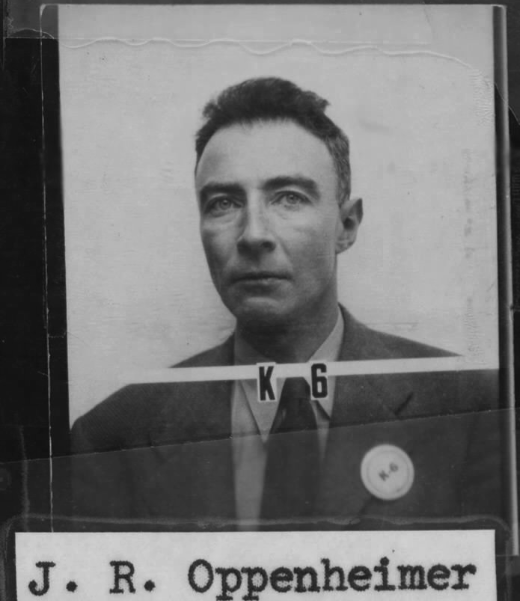
Oppenheimer’s ID badge from the Los Alamos Laboratory
Julius Robert Oppenheimer was born in New York City on April 22, 1904, the son of a German immigrant father and an American mother. He attended Harvard University and earned a bachelor’s degree in chemistry. He was accepted at the Cavendish Laboratory in Cambridge, where groundbreaking research on atomic structure was underway. He later attended the University of Gottingen in Germany and received a Ph.D. in Physics. After returning to the United States, Oppenheimer worked as a professor at the University of California, Berkeley, and the California Institute of Technology in Pasadena.
During the 1930s, Oppenheimer belonged to groups known to have communist ties. Though he never joined the Communist Party, he supported some left-wing philosophies. As Hitler and his Nazi party came to power, Oppenheimer withdrew his associations from communism.
When the US became embroiled in WWII, military officials recruited Oppenheimer to work on the top-secret Manhattan Project. Oppenheimer chose Los Alamos, New Mexico, as the location for the research laboratory. He had long admired New Mexico’s stark beauty, having spent time there recovering from an illness. Oppenheimer was appointed the laboratory’s first director.
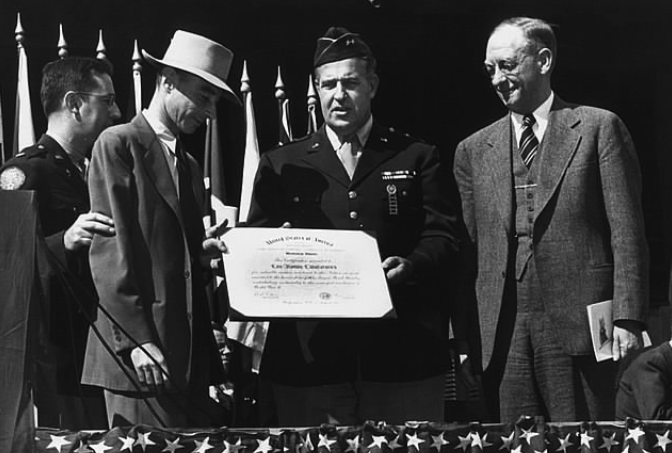
Los Alamos Laboratory presented an award to J. Robert Oppenheimer at the end of WWII
While working at Los Alamos, Oppenheimer and other prominent scientists learned to harness the power of nuclear fission. They successfully created and tested atomic bombs, ultimately leading to the development of the atomic bombs that were dropped on Hiroshima and Nagasaki, marking the dawn of the nuclear age.
Following the war, rumors of Oppenheimer’s ties to communism emerged. Still, he always flatly denied sympathizing with or supporting communism, saying that what he believed 14 years ago now seems “complete nonsense.” In 1953, Oppenheimer learned federal officials were probing his communist ties. It was the height of the McCarthy era, and officials were concerned that Oppenheimer might be a Soviet spy. The probe led the Atomic Energy Commission to conduct secret hearings in 1954, and though he was declared not guilty, Oppenheimer’s access to military secrets was revoked. Oppenheimer continued his scientific research and lectured around the world.
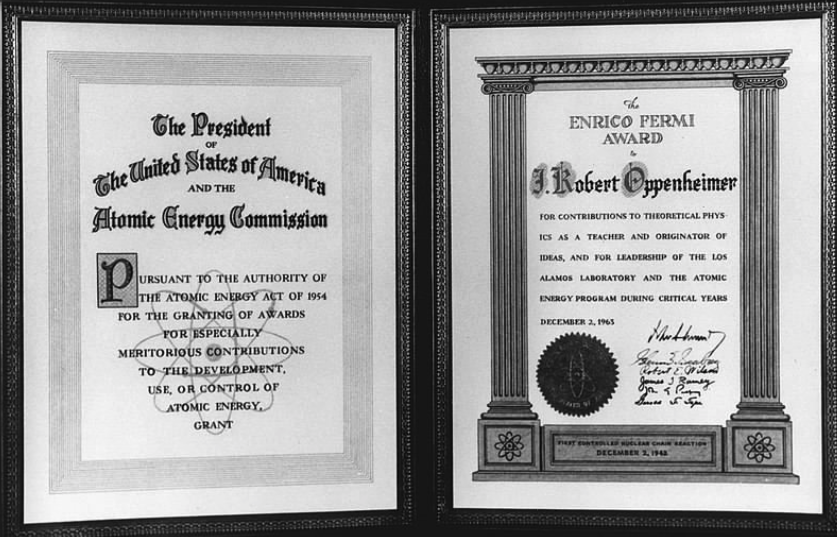
The Enrico Fermi Award presented to J. Robert Oppenheimer in 1963
In 1963, in a White House ceremony, President Lyndon B. Johnson presented Oppenheimer with the Enrico Fermi Award. The award, the highest honor bestowed by the Atomic Energy Commission, came through the efforts of the late President John F. Kennedy to restore Oppenheimer’s public name.
In 2014, the records from Oppenheimer’s 1954 hearings were declassified. After their release, historians and military experts found no sign of espionage or other evidence that questioned Oppenheimer’s loyalty to the United States.
J. Robert Oppenheimer died of throat cancer in 1967 at age 62. In 2022, the Department of Energy formally vacated the revocation of Oppenheimer’s security clearance. If you would like to learn more about J. Robert Oppenheimer, search Fold3® today.
If you have ancestors who have served at a military base in Washington State, you’ll love our new collection of US, Washington State Military Records, 1855-1950. This collection contains more than 140 thousand records for servicemembers in Washington State. These records reveal rich details, including birthdate, occupation, family members, military service, and more. The collection dates to 1855, some 30 years before Washington became a state. Here are a few examples of what you might find:
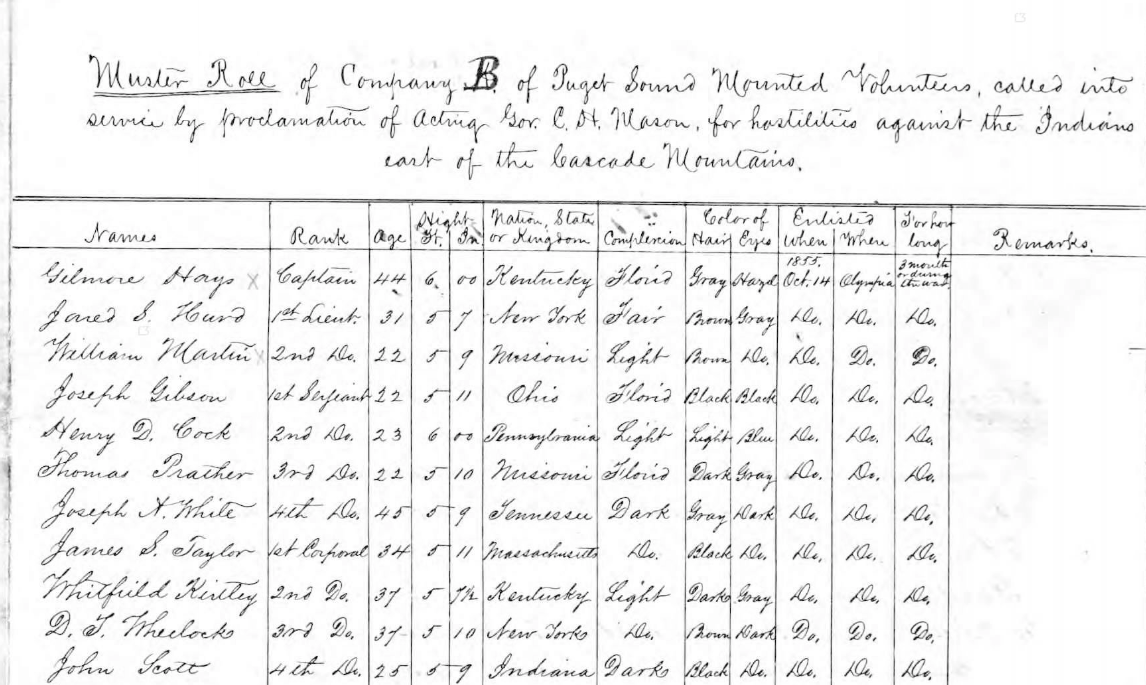
In 1855, the Washington Territorial Legislature passed a law to create the first organized militia. This collection contains muster rolls like this one for the Puget Sound Mounted Volunteers in 1855.
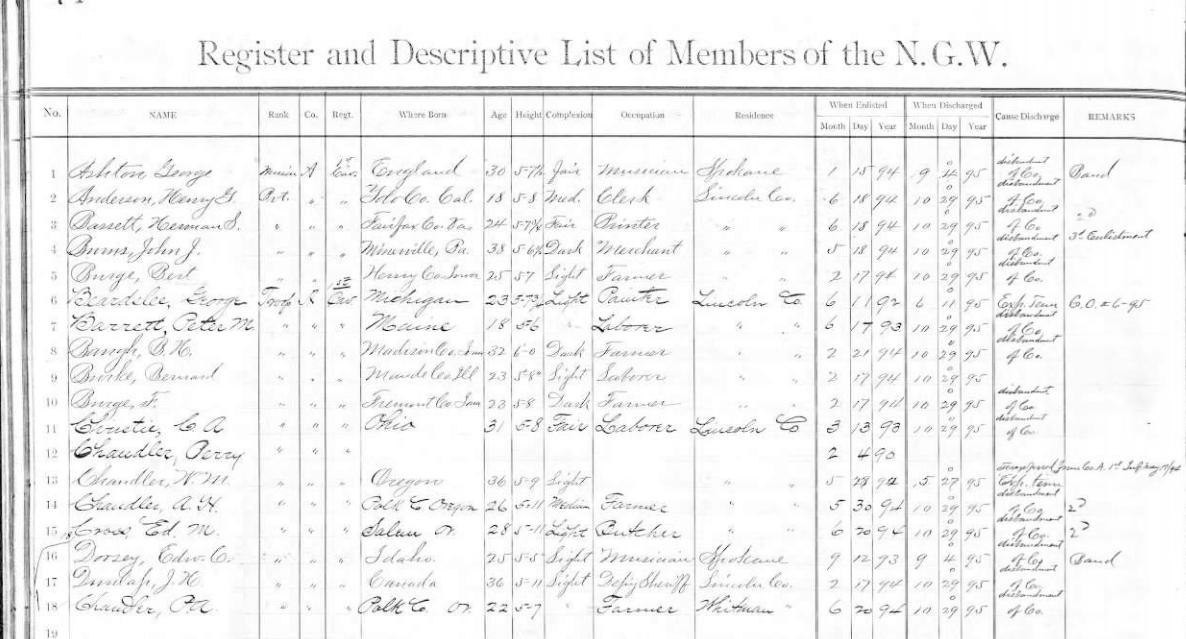
After Washington became a state, the territorial militia became the National Guard. This collection includes the Enlistment Registers for the National Guard in the late 1800s and early 1900s. The register provides information like occupation, age, enlistment date, and regiment.
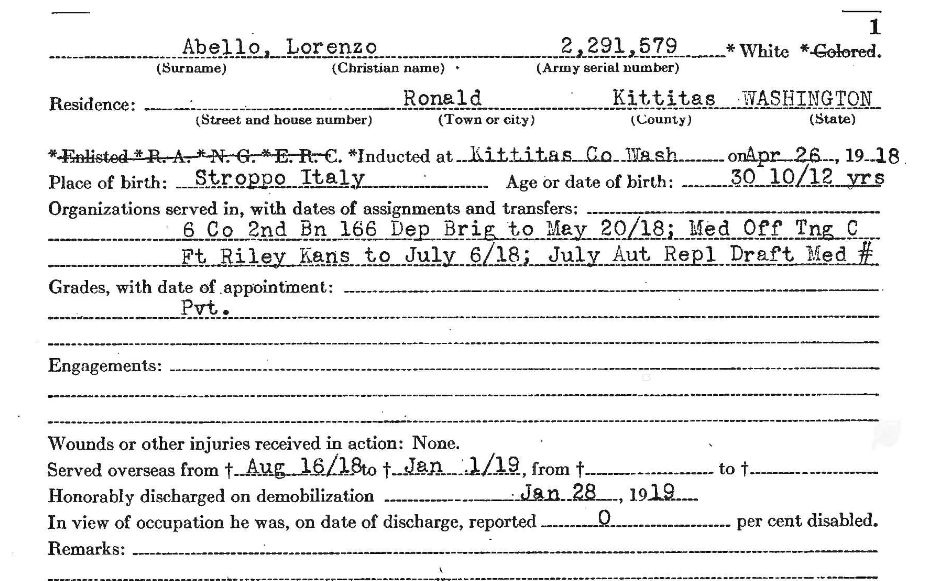
In 1919, the Department of War ordered states to compile a summary of each WWI veteran’s service. These cards, called WWI Service Statement Cards, include each veteran’s name, age, details of their military service and the rank they attained, serial number, the place of induction, and more.
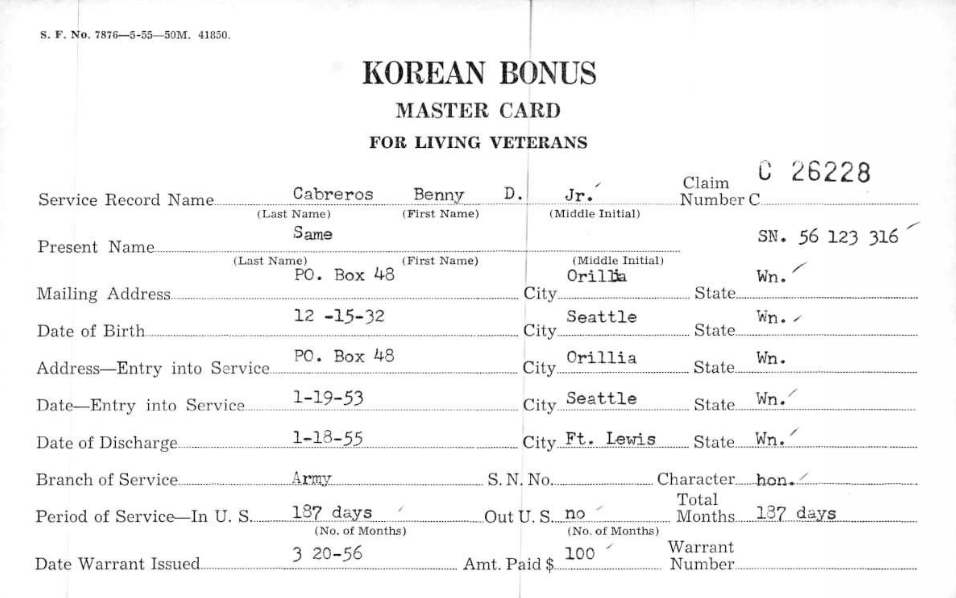
Veterans who served in the Korean War Era were eligible for a bonus. The Washington Veterans Bonus Claims cards in this collection record the veteran’s name, how long they served, and their bonus amount.
Start exploring our new collection of Washington State Military Records today on Fold3®!
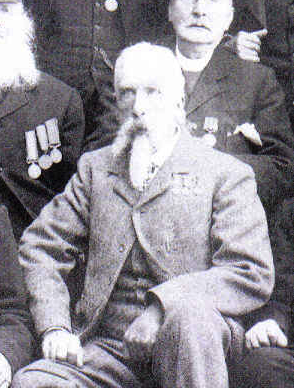
Sydney Herbert Davies is a veteran of the Civil War. Still, this soldier has the unique distinction of having served in three different nations – Great Britain, the United States, and New Zealand.
Photo Courtesy of Terry Foenander
Born in Dorset, England, in 1838, Davies was the eldest son of Royal Navy Admiral George Davies and Julia Hume Davies. Following his father’s footsteps, he enlisted in the Royal Navy, where he served for six years, followed by six years in the British Army, first in the Cambridge Militia and later as an Ensign in the 2nd Battalion of the 16th Foot. He fought in the Crimean War and was awarded two military medals.
In December 1861, British newspapers reported that Davies had declared bankruptcy. He was purportedly sent to prison. Hearing that Davies intended to leave the country, a judge issued an arrest warrant and ordered him to appear in court two months later, in February 1862.
When the appointed court date arrived, Davies didn’t show, and the British court proclaimed him an outlaw. Davies’s solicitor argued that his failure to appear in court was because his regiment had already boarded a ship in Southampton bound for Canada, and by failing to obey the orders of his superior officers, he was at risk of being court-martialed. The solicitor promised that Davies would soon return to England and sort out his legal troubles with the court.
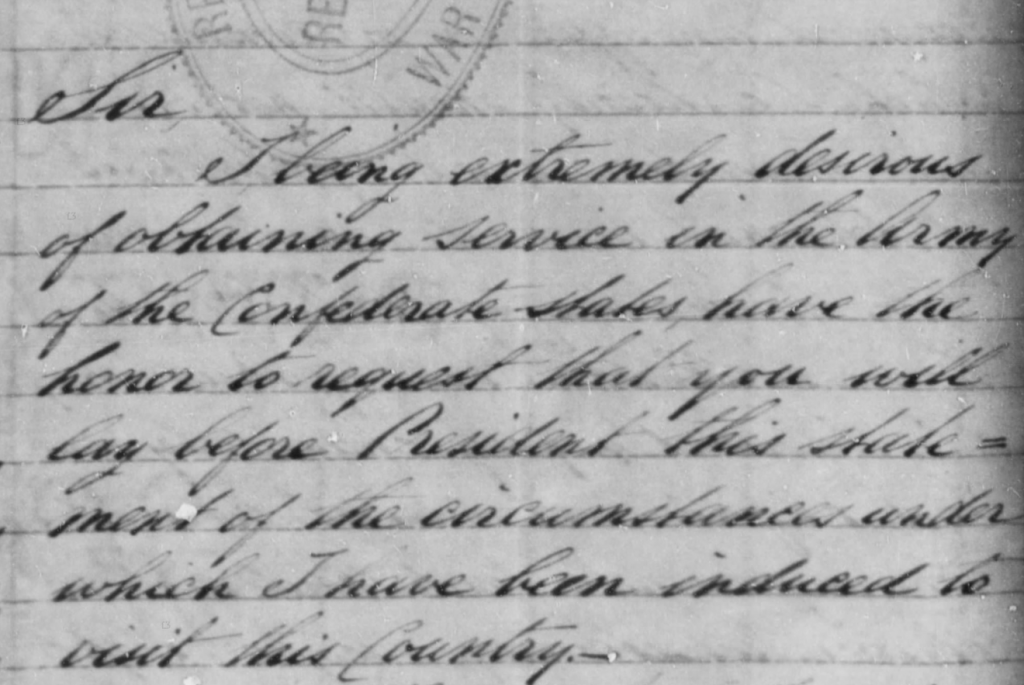
Letter dated June 9, 1863, in which Sydney Davies details the circumstances of his enlistment into the Confederate Army
Davies sailed to Halifax, Canada, with his regiment and, sometime in early 1863, made his way to New Jersey, where he became acquainted with a government official from the Confederate States of America. The agent, impressed with the skills of a professional soldier, enticed Davies to join the Confederacy. The agent dangled the carrot of an officer’s commission, and Davies accepted. A May 1863 British newspaper reported that Davies was retiring from the 16th Foot.
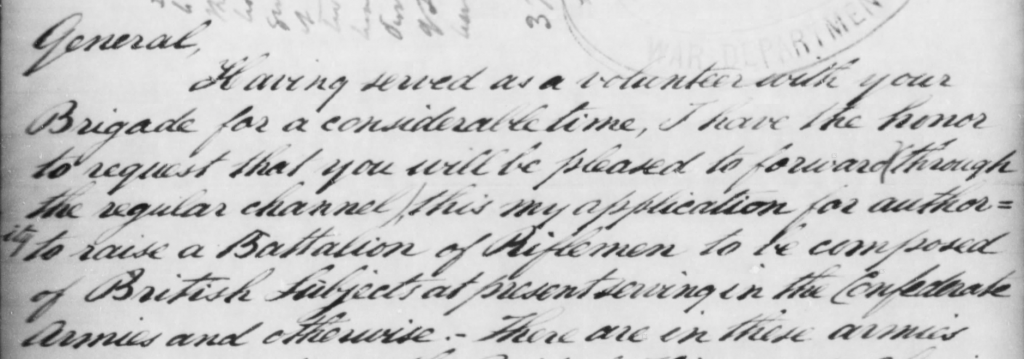
Letter dated April 4, 1864, in which Sydney Davies offers to raise a battalion of British riflemen to serve in the Confederate Army.
According to Confederate records, in the Spring of 1865, Davies was captured and taken POW. He was paroled at the Appomattox Court House on April 9, 1865, when Confederate General Robert E. Lee surrendered. He never received his desired commission as a Major.
Following the Civil War and with his U.S. military career in shambles, Davies left the United States and sailed for New Zealand. He rose through the military ranks in New Zealand, becoming a constable in the Armed Constabulary and serving in the New Zealand Wars. His financial situation remained precarious, and in 1872 he was sued for failure to pay an innkeeper 20 pounds, saying he didn’t pay because “he had not the money.”
Sydney H. Davies died in 1915 at the age of 77. He is buried in Dunedin, New Zealand.
If you would like to learn more about Sydney Herbert Davies and read the transcribed letters in his military file, see his Memorial here. Search additional military records today on Fold3®.
During WWII, the US Fifth Army liberated Rome on June 4, 1944. Rome had been considered the heart of Fascist Italy under Mussolini’s rule, and the liberation dealt a blow to Nazi Germany’s morale. Rome was one of three Axis capitals and had been under German control since 1943. Not only was the liberation symbolically and strategically important, but defending the city caused Germany to divert resources away from France, further strengthening the Allied position with D-Day landings in Normandy occurring two days later, on June 6, 1944.
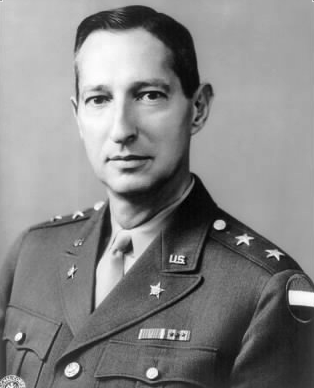
Lt. Gen. Mark W. Clark
In September 1943, Lt. General Mark W. Clark’s Fifth Army boarded landing crafts and dodged minefields to come ashore at the beaches of Paestum and Salerno. At the time of the invasion, the Fifth Army consisted of the VI American Corps, including the 36th and 45th infantry divisions and the 82nd Airborne Division. It also included the 10 British Corps 46 and 56 divisions, and 7 Armoured Division. Upon landing, the Fifth Army joined forces with the British Eighth Army and endured heavy fighting, advancing north to Naples and capturing the city in October.
The Fifth Army continued the advance northward along the western flank, while the British Eight Army advanced up the country’s eastern side. The winter months brought slow progress with ferocious fighting in rugged terrain as Allied forces crossed swollen rivers and mountain peaks. Relentless rains, snow, and icy winds created a quagmire of mud and made the fierce battle miserable.
By the end of 1943, Allied forces were bogged down at the Gustav Line, with German troops holding Northern Italy and Allied troops holding the southern part of the country. German forces had the advantage of holding the high ground, and they fortified it with land mines, big guns, and concealed artillery to create a solid defense. Allies needed to break through, and Cassino blocked the advance. Monte Cassino, an ancient Benedictine abbey, towered over the city. The Battle of Monte Cassino began in January 1944 and lasted four months with heavy casualties.
To break the stalemate at Cassino, General Clark sent seven divisions to flank the enemy with an amphibious landing at Anzio on January 22, 1944. The landings caught Germany by surprise, and they were forced to bring in reinforcements from their dwindling reserves. Fierce fighting at Anzio continued throughout the spring of 1944. Meanwhile, the rest of the Fifth Army and new reinforcements and equipment, including troops from Poland and France, were contending with German forces at Cassino. With help from the reinforcements, the Allies broke through the Gustav Line in May 1944.
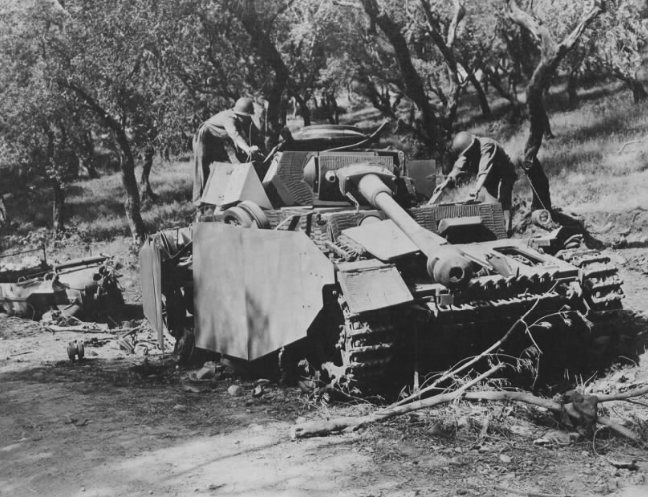
Soldiers Examine Tank Left Behind as Germans Fled Rome
On May 23, the troops at Anzio broke out of the beachhead and rendezvoused with the rest of the Allied army at Borgo Grappa. At the same time, military officials were in the final planning stages of the D-Day invasion at Normandy. The fighting in Italy had forced Germany to draw away resources which proved advantageous to the Allies along the Western Front.
Back in Italy, the Fifth Army was now just 30 miles outside of Rome. As troops advanced towards the city, they passed the wreckage of German tanks, guns, and equipment left behind as German forces fled.
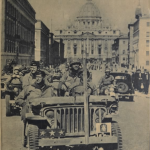
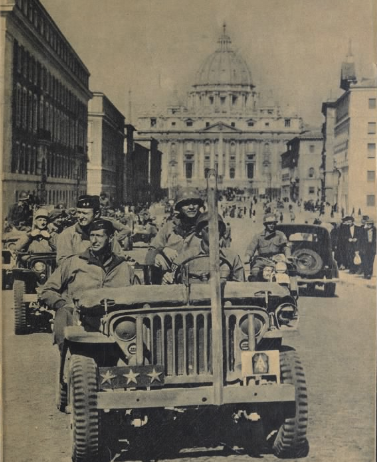
Lt. Gen. Mark W. Clark and the US Fifth Army Enter Rome
On June 4, 1944, the Fifth Army entered Rome from the south. They were the first Allied forces to liberate a capital city from Fascist control on European soil. City residents greeted American soldiers with cheers and hugs as the troops paraded past historic landmarks, including the Colosseum and the Forum. The liberation of Rome marked a turning point in the Italian campaign, giving a morale boost and hope that a defeat of Germany was possible.
If you would like to learn more about the Liberation of Rome, search Fold3® today!
We have some exciting news to share. Ancestry® and the National Genealogical Society® have recently finalized a contract with the National Archives and Records Administration (NARA) to resume digitization of the War of 1812 Pension Files. Like so many other things, this ongoing project came to a screeching halt during the closure of NARA due to COVID-19.
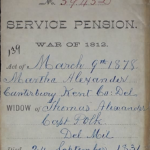
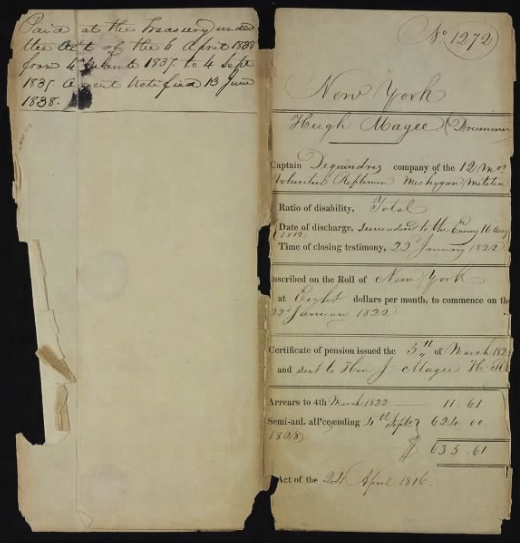
Pension File for Hugh Magee
This massive undertaking to digitize some 7.2 million pages in this collection began in 2010. So far, we’ve completed 83% of these records. We’re just finishing up the final files for surnames beginning with ‘R’ and will move on to files with surnames beginning with the letters ‘Sj to U’ next. These digitized records are available to view for free on Fold3®. Our goal is to complete this next phase in about a year. We’ve already added new files to the site and will continue to update this collection regularly.
The War of 1812 Pension Files include full pension application files for soldiers, sailors, and their widows and children, who served in the War of 1812. They can reveal extraordinary details about military service and often include critical genealogical information.
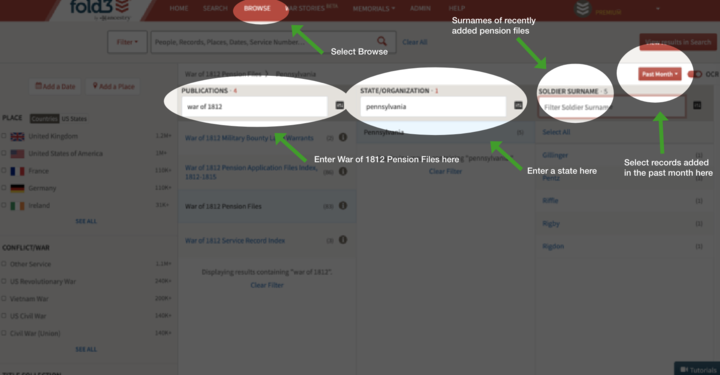
If you’ve already scoured this collection, and have been waiting patiently for new content, here’s how to use our Fold3® Browse feature to filter recently added records. From the top menu bar, select “Browse” and then enter War of 1812 Pension Files under Publications. You can then filter to State and narrow your results to content added in the past month. Here you will see the names of those whose pension files we’ve recently added.
Start exploring the War of 1812 Pension Files today on Fold3®!
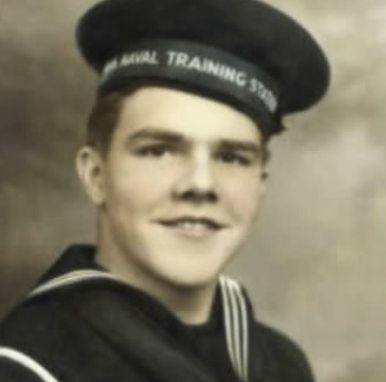
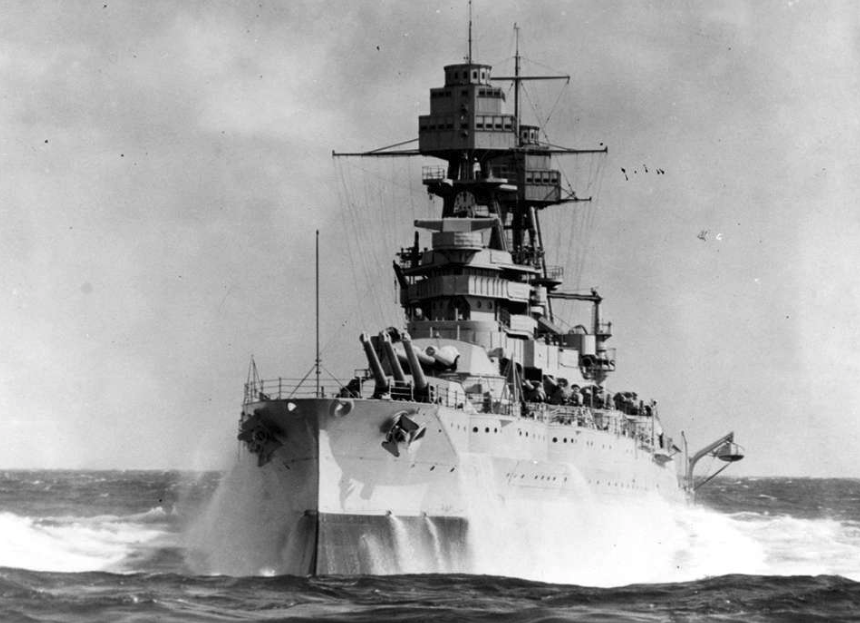
The telegram arrived on a cold January day in 1942. It read, “After an exhaustive search, it has been found impossible to locate your son, Robert Edwin Kline, gunner’s mate, second class, U.S. Navy.” The sailor’s mother refused to accept the news and continued to hold out hope. How could it be? Bobby was just 22. Robert Edwin Kline was one of 1,177 sailors and Marines killed in the attack on the USS Arizona at Pearl Harbor on December 7, 1941.
Robert Edwin Kline
Most of the sailors killed aboard the Arizona went down with the ship. However, the bodies of 85 (and possibly as many as 150) were buried, their remains unidentified and comingled, in graves at the National Cemetery of the Pacific in Honolulu. More than eight decades later, Kevin Kline, Robert Kline’s great-nephew, is among those leading an effort to identify the fallen. He is the driving force behind Operation 85 – a civilian effort led by family members of the unrecovered to assist the Defense POW/MIA Accounting Agency (DPAA) in acquiring DNA samples from surviving family members.
DNA technology did not exist in the 1940s, but more recent advances now make it possible to identify those previously unknown. That’s where Operation 85 comes in. They are facilitating the effort to find surviving family members and connecting them with the DPAA to take a DNA test. The DPAA administers the DNA tests at no cost to participants.
Robert E. Kline’s official training certificate for Gunner’s Mate 3rd Class and GM3c patch and sleeve insignia – photo courtesy Operation 85
Operation 85 hopes to collect at least 643 family DNA samples within the next two years. They hope that by December 7, 2026, the 85th anniversary of the attack on Pearl Harbor, the project will be classified as a “Working Priority” within the DPAA, leading to proper identification and the reburial of remains in a marked grave.
USS Arizona
How can you help? If you are related to someone who served aboard the Arizona, visit Operation 85 here to learn more. We can’t think of a better way to honor the fallen this Memorial Day than to help provide a properly identified final resting place.
Explore the names on the wall of the USS Arizona Memorial in our free interactive collection on Fold3®. Leave a photograph or story and learn more about those who made the ultimate sacrifice at Pearl Harbor. Visit Operation 85 to learn more about their mission, and search Fold3® today to learn more about the attack on Pearl Harbor.
Thanks to our special guest contributor Michael Strauss, an Accredited Genealogist from AncestryProGenealogists® for this informative article on military research using dog tags.
Behind the imposing gates of Arlington National Cemetery in Virginia rests the Tomb of the Unknown Soldier. Around the clock, active-duty personnel stand as sentinels remembering our fallen veterans. Many cemeteries have remains of soldiers from past wars marked with a single haunting word, “Unknown.” To properly identify each man and woman who have paid the ultimate price for their country, the military created identification tags. Here is a look at how those tags have changed over the years.
Civil War
The Civil War changed how military officials recorded battlefield deaths. On April 3, 1862, the Adjutant General Office (AGO) of the War Department issued General Order No. 33, which in effect read: “To secure as far as possible the decent interment of those who have fallen or may fall in battle…lay off lots of ground in a suitable spot near every battlefield and… register of each burial and will be preserved”.
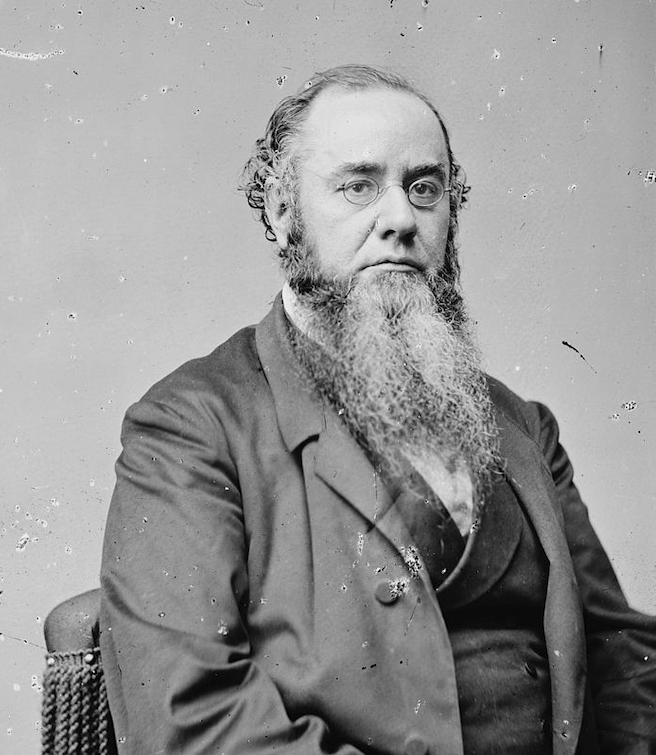
Edwin M. Stanton
During the Civil War, large numbers of casualties on both sides prompted soldiers and civilians to consider other ways to identify fallen soldiers. In 1862, New York City resident John Kennedy wrote to the Secretary of War Edwin M. Stanton. He proposed that the US Army provide a medal identification badge for all officers and enlisted men that soldiers could wear under the clothing. The War Department rejected Kennedy’s proposal.
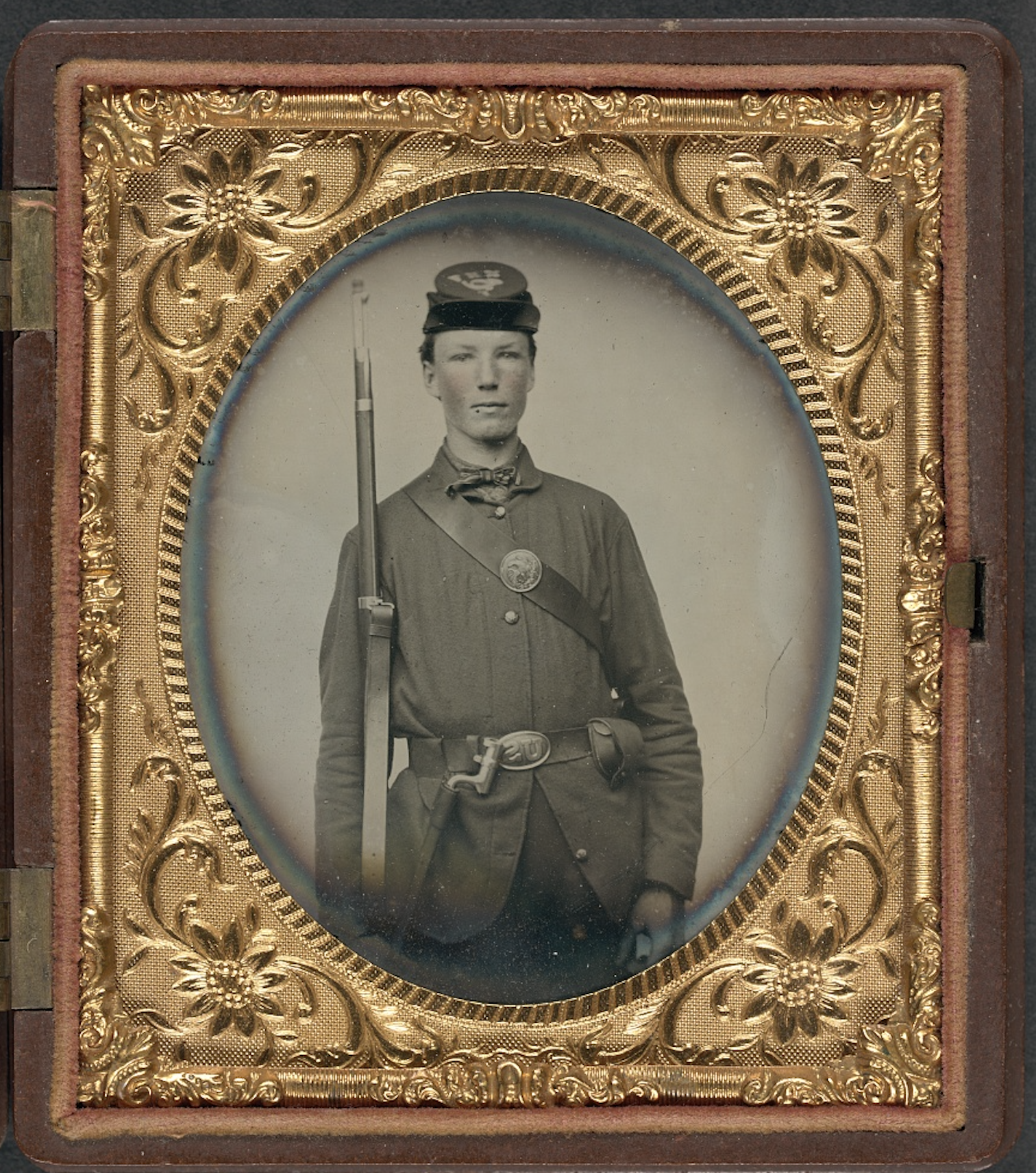
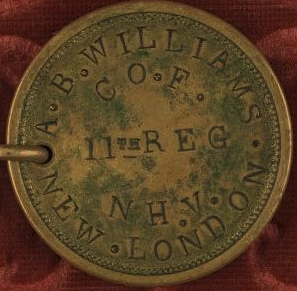
Civil War soldiers could purchase (at their own expense) identification badges or tags manufactured by military camp suppliers called sutlers. Sutlers were civilian contractors who traveled with the armies selling commonly needed items from photographs to wares. Some of these identification badges and tags were ornate in design.
Civil War soldierAlvin B. Williams
Civil War Identification Tags for Alvin B. Williams
Death became a reality for thousands of soldiers who had no proper identification. During the battle of Cold Harbor on June 3, 1864, soldiers, knowing they might be killed, wrote their names and military units on loose slips of paper, and pinned them to their kepis (caps) or sack coats. They hoped someone would identify their remains after the battle. Another 35 years would pass before the subject of identification tags was brought up again.
Spanish-American War
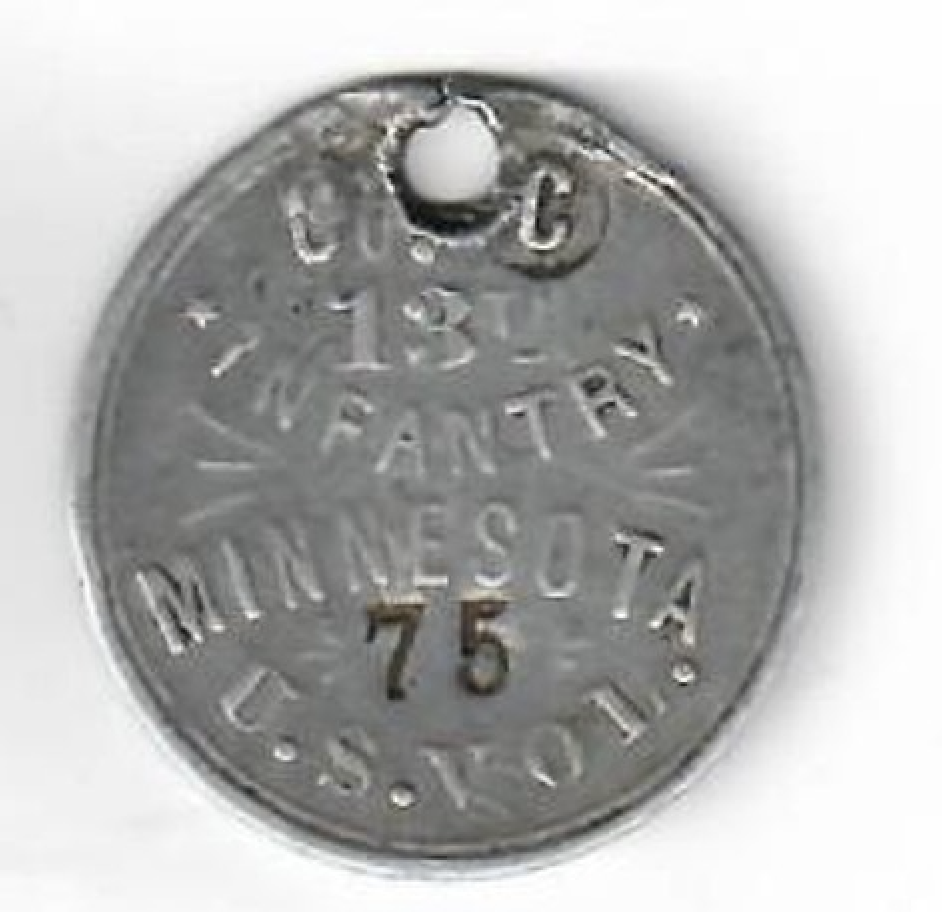
The War with Spain began on April 25, 1898, and again required the United States military to turn their attention to how to identify fallen soldiers. With fighting in Cuba, Puerto Rico, and the Philippines, the American Red Cross (founded in 1881) took up the cause to provide identification tags for soldiers. Neither the United States military nor individual states provided any identification tags at that time. The San Francisco Red Cross Society, one of the strongest advocates of tags, furnished them to thousands of soldiers en route to the Philippines. The tags were smaller than a half-dollar and made of aluminum.
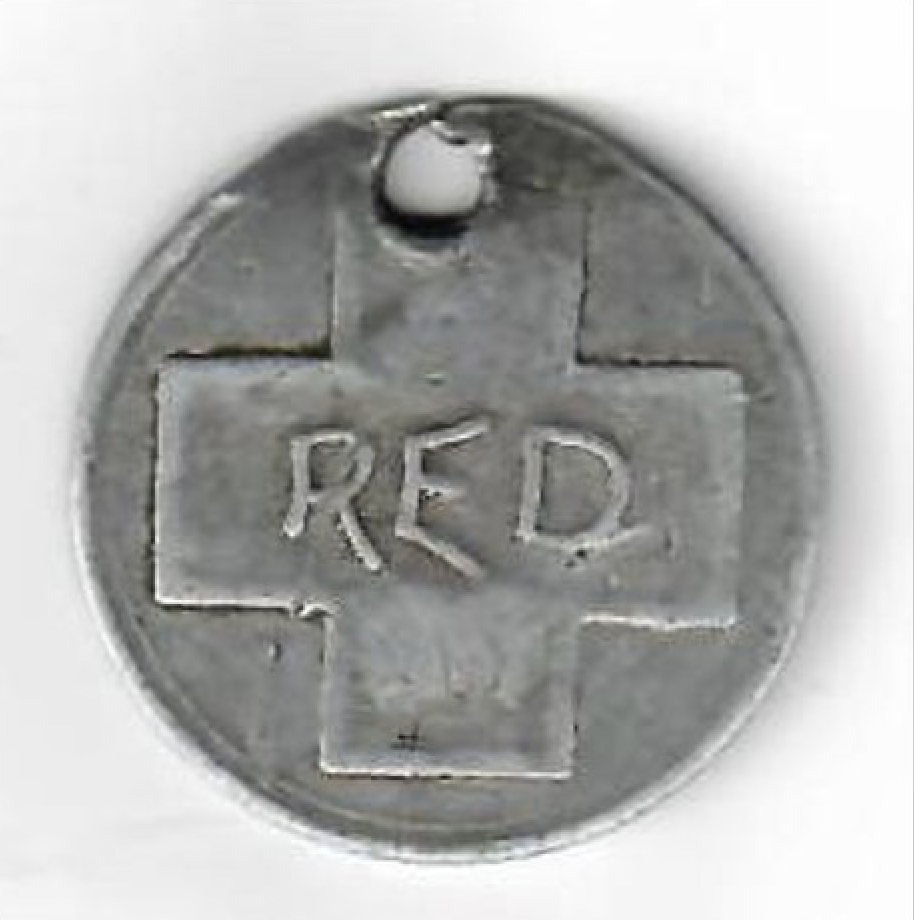
Spanish American War Identification Tags
The discs were inscribed with the soldier’s company, regiments, and a number corresponding to their eventual Compiled Military Service Record numerical identifier. On the other side of the disc was the visual design of the Red Cross, inscribed with the letters “RED.”
In 1899 United States Army Chaplain Charles C. Pierce was instrumental in establishing the Quartermaster Graves Registration Service. He wrote to the AGO office: “It is better that all men should wear these marks as a military duty than one should fail to be identified.” Pierce, a veteran of the Spanish American War, had witnessed the horrors of war and strongly advocated issuing identification tags for all soldiers in the military. Six more years would pass before the military adopted official tags.
Official Military Tags Introduced
On December 20, 1906, the US Army formally adopted Identification Tags when they issued General Order No. 204. The order read, “An aluminum Identification tag the size of a silver half dollar…stamped with name, rank, company, regiment, or corps of the wearer will be worn by each officer and enlisted man…whenever the field kit is worn.” Each tag had a cord attached through a small hole. The Ordnance Department provided each Army organization and unit with a steel die kit and two sets of dies, one for the alphabet and the other for Arabic numerals.
World War I
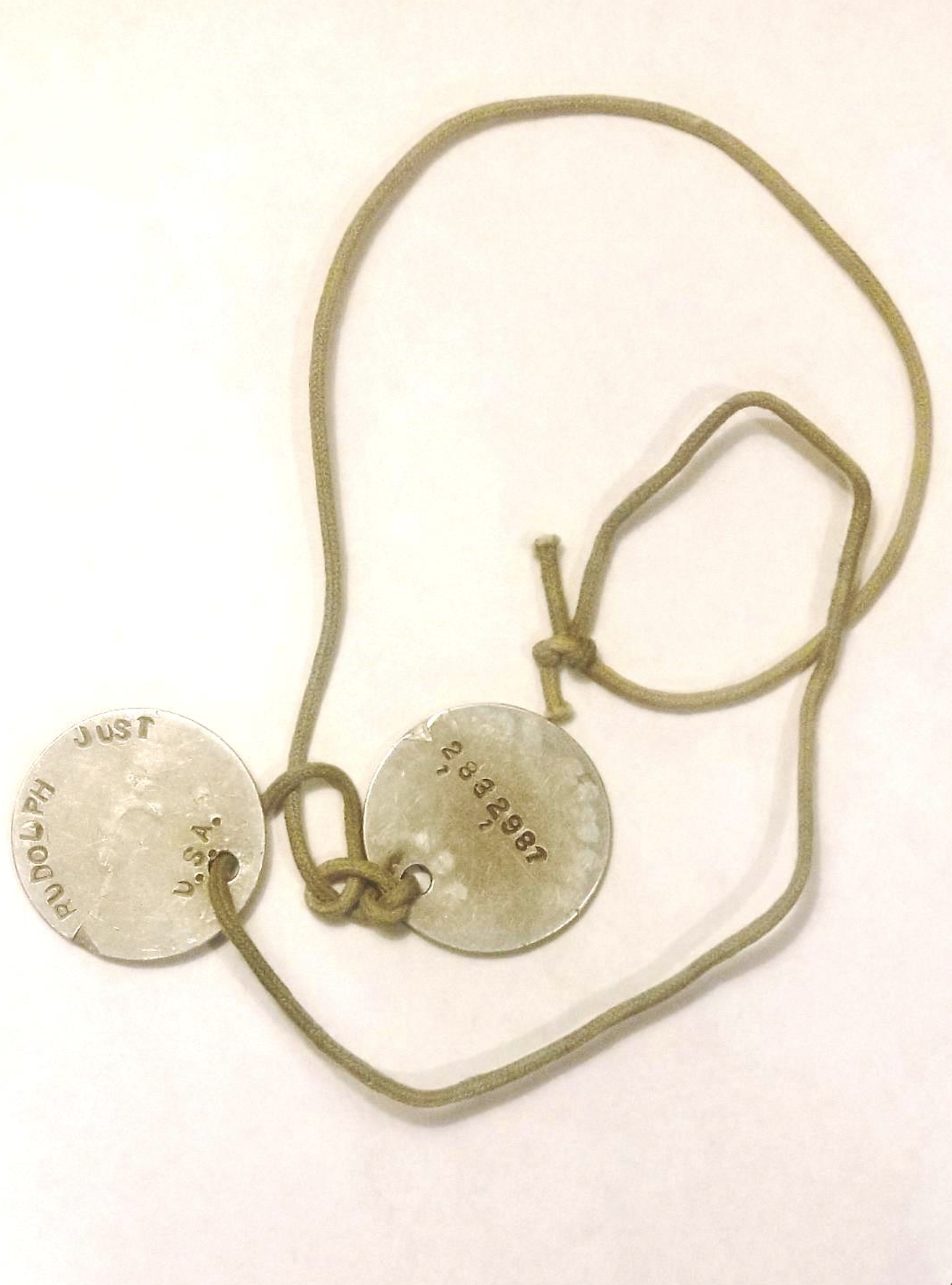
Following the entry of the United States into World War I on April 6, 1917, the United States War Department changed regulations on issuing tags. General Order No. 80, issued on June 30, 1917, read, “Gratuitous issues will be limited to two tags to an enlistment.” Soldiers were now issued two matching identification tags. An addendum called, Change of Army Regulations (or CAR) issued with General Order No. 58 on July 6, 1917, added, “These tags are prescribed as part of the uniform and when not worn as directed…will be habitually kept in the possession of the owner”, therefore making the soldier responsible for the care of the tags. They were to be part of their kits and always kept with them.
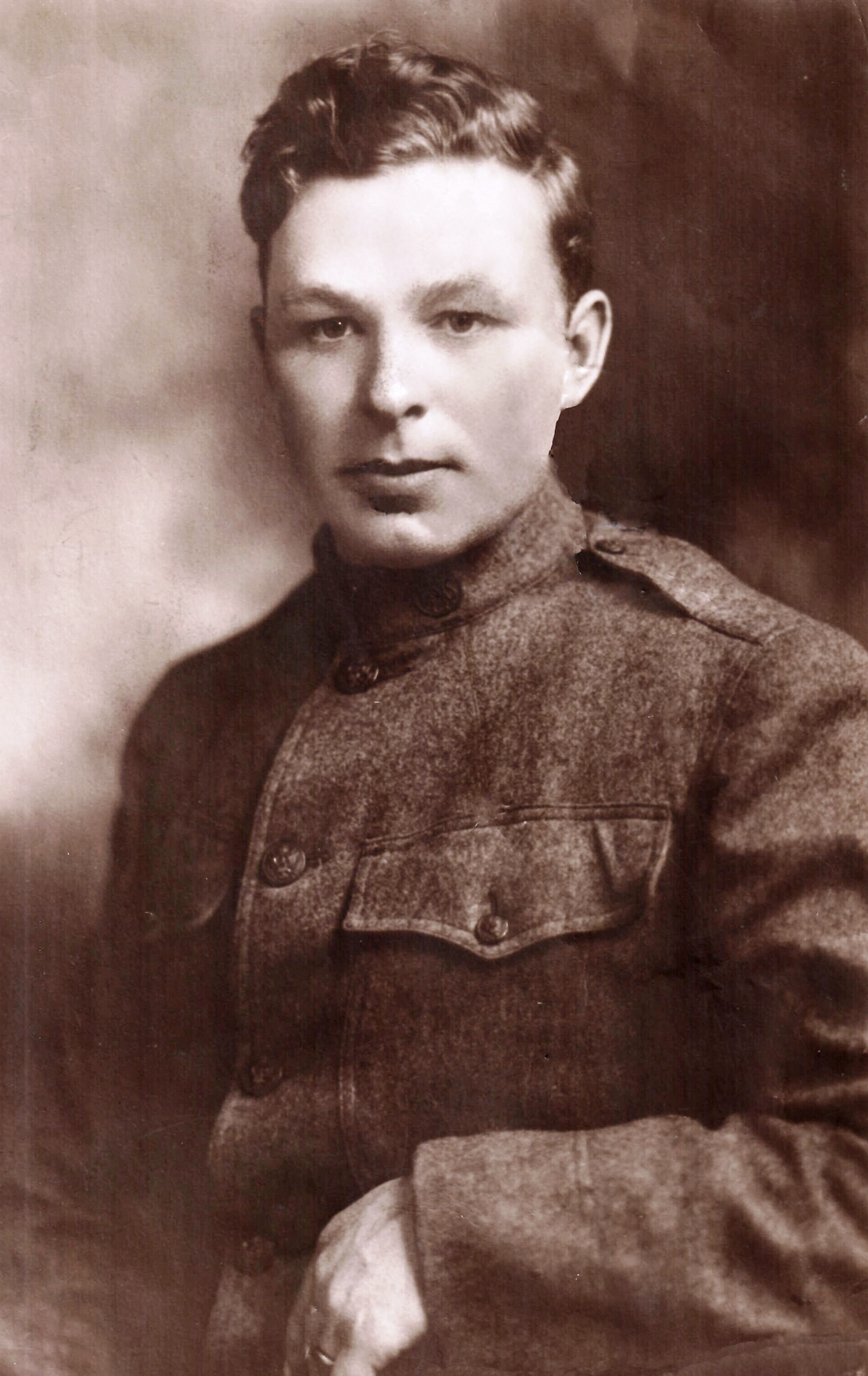
WWI Soldier Wagoner Rudolph Just
Another significant change to identification tags was issued with General Order No. 21 on August 13, 1917, when the military added, “The tag now prescribed for wear by officers and enlisted men will be worn also by all civilians attached to these forces.” Civilian employees attached to the American Expeditionary Forces (AEF) would be authorized to wear identification tags. One final wartime change occurred on February 12, 1918, with the issuing of General Order No. 27. That order authorized service numbers for enlisted army personnel. The numbers were added to the identification tags.
Wagoner Rudolph Just’s Identification Tags
Identification Tags for other branches
On October 6, 1916, the US Marine Corps issued General Order No 32, which read: “Hereafter identification tags will be issued to all officers and enlisted men of the Marine Corps… always be worn when engaged in field service…at all other times they will either be worn or kept in possession of the owner.” Initially believed to be of little importance, opinions later changed.
On May 12, 1917, the Secretary of the Navy Josephus Daniels issued General Order No. 294 stating: “The identification tag for officers and enlisted men of the Navy consists of an oval plate Monel metal…and suspended from the neck by a Monel wire encased in a cotton sleeve”. The Navy had more information added to the tags, which read, “The tag has on one side the etched fingerprints of the right index finger…the other side the individual’s initials, surname, month and year of enlistment [in numerals] …this side will also bear the letters U.S.N,” with officers it added: “Initials and surname, rank held, and date of appointment.”
The US Coast Guard issued Identification Tags authorized by the Chief of the Bureau of Navigation in Circular Letter No. 152-41 on December 16, 1941, which read, “The Bureau also directs identification tags be prepared and furnished the officers and enlisted men of the Coast Guard…the letters USCG should be stamped or etched on the face of the tag issued to officers and men of the Coast Guard”. In times of war, the Coast Guard operated under orders of the Navy, and they began to discontinue tags in the 1970s.
Between the World Wars
Following the end of World War I on November 11, 1918, the US Army made very few changes to identification tags until December 1, 1928, with Army Regulations 600-40 stating, “Tags are now officially part of the uniform and must be worn at all times.” From 1906 to 1928, tags were not officially considered part of the uniform. By the mid-1930s, identification tags were referred to by their colloquial name, “dog tags,” and were commonly worn by soldiers,sailors, and marines. The Army Historical Foundation wrote that newspaper editor William Randolph Hearst coined the term to undermine support for President Franklin D. Roosevelt’s New Deal. Hearst heard that employees of the newly formed Social Security Administration were issued nameplates for personal identification, and he nicknamed them “dog tags.” There are other rumors of how the nickname emerged, but regardless, the history stretches back for decades.
World War II
In 1940, before the United States entered World War II, a major change was made to tags. Four new types were introduced for use during the war.
The first type came in December 1940 in Army Regulations (AR 600-35). It included a new shape and size and was made of Monel metal. It was two inches long by 1 1/8 inch wide and 1/40 inch in thickness. The tags included five lines of information:
Name of soldier
Serial Number and then added the blood type “A”, “B”, “AB” or “O” blood.
Name of emergency contact
Street address of contact
City and State of contact
The second type, introduced in November 1941, made additional changes, including adding the religious affiliation of the wearer on the fifth line. Those designations were C for Catholic, H for Hebrew, and P for Protestant. This presented a challenge for service members who were members of the Church of Jesus Christ of Latter-day Saints. The church, not considering itself Protestant, requested that the letters “LDS” be included. They contacted the War Department, but the request was not formally adopted. Some soldiers created their own dog tags that included the LDS designation. Thus, the five lines on this tag were:
Name of soldier
Serial Number and Tetanus immunization (Letter T and 2-number year and added 2-number year for when toxoid was completed) and also the blood type of the wearer with the following: “A, “B”, “AB”, or “O” type blood.
Name of emergency contact
Street address of contact
City and State of contact/Religious Designation
The third type, introduced in July 1943, cut the lines down to three and included the following modifications:
Name of soldier (with first name, middle initial, and last name)
Serial Numbers, Tetanus immunization date, tetanus toxoid date, and blood type abbreviated.
Religion of wearer (abbreviated)
The fourth type, introduced in March 1944, also included three lines and lasted until April 1946. It was nearly identical to the previous type, but the last name was listed first, followed by the first name, last.
One additional change occurred when a notch was added to one side of the tag. A myth began circulating that the notch was added for medical reasons, to hold open the mouths of deceased soldiers to prevent the body from gaseous bloating. In reality, the notch was created by the stamping machine.
In the years leading up to the Korean War on July 1, 1947, the tags were further modified and began adding prefixes as part of the serial numbers, with “RA” added for Regular Army.
Korean War During the Korean War from 1950-1953, two styles of tags were used. One was for the US Army, and the other for the US Navy. The Army’s tags included these abbreviations:
Prefix “RA” Regular Army
Prefix “US” Enlisted Draftee
Prefix “NG” National Guard
Prefix “ER” Enlisted Reserve
Prefix “O” Officer
These prefixes came before and were part of the assigned serial number (RA12345678). There were four lines on this tag, with the fifth left blank:
Name of soldier
Serial Number of soldiers, including prefix used for type of service
Tetanus date and blood type
Religious preference
The US Navy issued tags with three lines that included:
Name of sailor
Serial Number of sailors
Letters “USN” and religion
Vietnam War
Several variations of identification tags were used during the Vietnam War. The first type, used through 1967, utilized five lines, and tags were no longer notched.
Surname of soldier
First name and middle initial
Prefix and Service Number
Blood type
Religious Preference – Could be spelled out instead of abbreviated.
The second type issued during the Vietnam War was used from 1967-1969 with very little change from the previous type. They included:
Surname of soldier
First name and initial
Prefix and Service Number
Blood type (positive or negative could be listed), and number
Religious preference – with the word spelled out
The third type used during the Vietnam War had effective use from 1969.
Surname of soldier
First name and initial
Social Security Number
Blood type – can be shown as negative (neg) or positive (pos).
Religious preference – with the wording spelled out
During the Vietnam War, the US Marine Corps issued tags during the same period as the Army. The first type used by the USMC, was similar to the Army’s.
Surname of soldier
First name and initial
Service Number, or if after 1972, the Social Security Number
USMC listed, followed by the size of the gas mask worn (S-M-L)
Religious preference – with the word spelled out
The US Navy also followed a similar style during the Vietnam War.
Surname of soldier
First name and middle initial along with blood type (positive or negative could be abbreviated)
Prefix used and Service Number or Social Security Number after 1972
Abbreviation of USN listing the branch of service
Religious preference – with the word spelled out
Searching for records of burials of military veterans
Fold3® has several collections listing known military dead for different branches from the 19th and 20th centuries, where military tags were used to identify veteran remains. These collections include:
This list isn’t exhaustive, and other collections are available on Fold3® and Ancestry® that provide additional records of military dead for several different war periods involving the United States. Learn more about your military ancestors on Fold3® today.